News Digest (www.upstreamonline.com)
North American LNG Market Stability Amid Global Turmoil
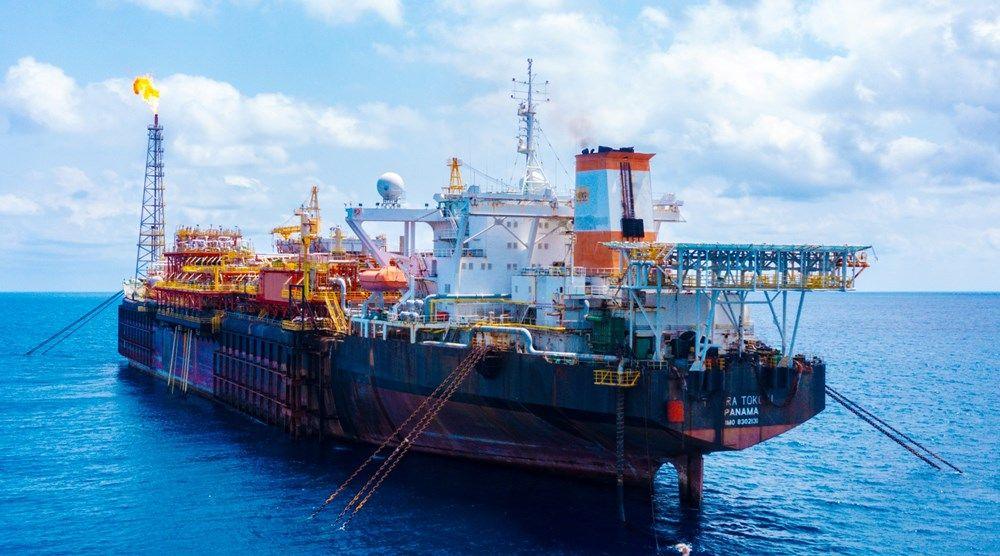
During Upstream's Global Development and Decarbonisation Week 2026, panellists highlighted that the reliability of North America's LNG export market stands in stark contrast to the upheaval caused by the Middle East conflict. However, maintaining this stability requires developers to overcome rising costs and tightening economics. The rapid expansion in export capacity over the past decade has continued into 2026, with several major final investment decisions (FIDs) announced, including Delfin Midstream's $5 billion FID for its first floating LNG vessel, Caturus-led Commonwealth LNG's $9.75 billion FID, and Venture Global's $8.6 billion financial close for Calcasieu Pass 2's second phase. Michael Webber of Webber Research and Advisory noted that a couple more US LNG projects may soon reach FID, though growth was already scheduled from the US Gulf and brownfield expansions.
Supply Security and Contract Flexibility
The Middle East conflict has reinforced the importance of supply security and flexibility, according to Fabricio Sousa of Worley Consulting. US exporters offer long-term contracts with destination flexibility, allowing buyers to sell and reroute cargoes on the open market. Sousa stated that North America clearly answers the question of reliable LNG supply, given its resource depth and export capacity. However, Michael Short of Bain and Co. noted that questions remain about how nations will pursue supply sources, which will influence global demand over the long term.
Key Constraints: Execution and Economics
The greatest constraint for North American LNG developers is the ability of contractors to execute projects quickly, Sousa said, with developers who locked supply chain commitments early being in a better position. Webber identified the biggest hurdle as the economics on long-term volumes, as inflation for engineering, procurement, and construction (EPC) has far outstripped upside in long-term pricing. Although LNG is seen as a bridge fuel for the energy transition, "the math still needs to work," Webber emphasized, noting that rising costs have made it challenging to reach FID. Developers are now renegotiating EPC and sales and purchase agreement pricing to achieve viable projects, relying on merchant capacity for long-term returns.
Market Dynamics and Future Growth
Webber noted that the US Henry Hub benchmark should remain more stable than European and Asian benchmarks, benefiting US Gulf exporters. However, the rate of growth for new US projects in 2026 and 2027 will not match previous years, as much low-hanging fruit has been exhausted. Short observed that the pace of long-term contracting may not have changed since the war began, but there has been a shift toward contracts with portfolio buyers, remarketers, and trading houses. Webber added that trading houses are best suited for long-term cargoes due to their ability to manage dynamic risk and swap cargoes. Short concluded that a key market determinant will be which entities control cargoes with destination flexibility, as they will act based on daily economic sense and risk-return perspectives.
22 June 2026
This material is an AI-assisted summary based on publicly available sources and may contain inaccuracies. For the original and full details, please refer to the source link. Based on materials by Robert Stewart. All rights to the original text and images remain with their respective rights holders.
Our solutions

nv.analysis
Is a decision support solution designed to identify potential well candidates for workovers and provide reliable geological and technological information

Cloud / on-premise

Pre-project survey

Proof of concept

24/7 technical support

nv.planning
Is a decision support solution intended for comprehensive operational planning of onshore and offshore upstream activities
Cloud / on-premise
Pre-project survey
Proof of concept
24/7 technical support

nv.ID
Is a data storage solution for managing downhole equipment lifecycle
Cloud / on-premise
Pre-project survey
Proof of concept
24/7 technical support