
NewVision Platform 2.0 supportive elements
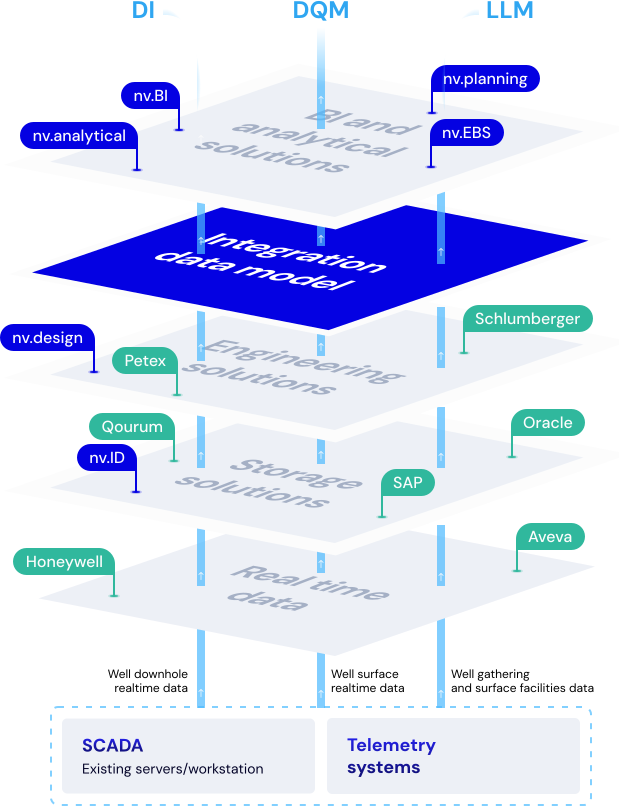
Data Integration
The NewVision Ecosystem is built on a robust data integration model that ensures seamless interaction between its modules and third-party systems. Our data model is designed to create a unified domain model, enabling consistent and accurate data exchange across different platforms. With built-in tools for data integration (DI) and data quality control and enrichment (DQM), this model allows for the integration of external data sources and provides an API for easy access and manipulation of data.
Data Integration (DI) Service
Extracts and integrates data from various sources, ensuring that all modules within the ecosystem can interact seamlessly
Data Quality Management (DQM) Service
Controls and enriches data using both conventional methods and AI algorithms, ensuring the highest data quality
Large Language Model (LLM)
Controls and enriches data using both conventional methods and AI algorithms, ensuring the highest data quality through the Data Quality Management (DQM) Service
NewVision Platform 2.0 Components

NewVision Platform 2.0 System Modules
NewVision WebCore
Unifed web interface and module registry
NewVision DataDiscovery
Data intengration module
NewVision Report
Report generation
NewVision Scheduler
Scheduled task execution
NewVision API Gateway
Unified access point to services
NewVision HUB
Authentication and Authorization
Environment
Docker containers (OCI), Kubernets-based orchestration


DBMS
Oracle, SAP, HANA, PostgreSQL



Integration bus
Apache Kafka, NewVision DI

API
OData/GraphQL, OAuth2(oidc), Web-api
Primary Web Browser
Chrome/ Safari / Edge


Additional Description
The components of the NewVision Platform 2.0 are implemented in .NET Core 8, Java 21, Python, React JS.
Open source software is used as components of the NewVision ecosystem.
Ecosystem: Apache Kafka, Elasticsearch/Logstash/Kibana, HashiCorp Consul, HachiCorp Vault, Redis, Grafana, Prometheus, ClickHouse, Nginx, Apache NiFi
Core System Modules
The NewVision Platform 2.0 is a comprehensive suite designed to provide robust and scalable solutions for the oil and gas upstream industry. The ecosystem is composed of several key modules, environments, and integration tools that work together to ensure seamless operation and data management
NewVision WebCore
A unified web interface that serves as the central hub for module registry and user interaction across the ecosystem

NewVision DataDiscovery
Facilitates data integration, allowing for the smooth aggregation and management of data from multiple sources

NewVision Report
Supports the generation of detailed reports, providing insights and analytics essential for decision-making.

NewVision Scheduler
Manages scheduled tasks, ensuring that critical operations are performed automatically and on time

NewVision API Gateway
Acts as a unified access point for services within the ecosystem, streamlining communication between different modules

NewVision HUB
Provides authentication and authorization services, ensuring secure access to the ecosystem’s resources

NewVision Platform 2.0 system components
Additional Technical Description
Technology Stack
The components of the NewVision Ecosystem are implemented using .NET Core 8, Java 21, Python, and ReactJS, reflecting a modern and versatile development environment.
Open Source Components
The ecosystem leverages open-source software, including Apache Kafka, Elasticsearch, Logstash, Kibana, HashiCorp Consul and Vault, Redis, Grafana, Prometheus, ClickHouse, Nginx, and Apache NiFi, ensuring reliability, scalability, and innovation
Supported Databases
Oracle, SAP HANA, PostgreSQL
The NewVision Ecosystem supports leading relational databases, ensuring compatibility and robust data management capabilities
Integration Bus
Apache Kafka, NewVision DI
Utilizes Apache Kafka and NewVision's own data integration tools to handle large-scale data streaming and processing, enabling real-time data flows across the ecosystem
Supported Browsers
Chrome, Safari, Edge
The NewVision Ecosystem is optimized for leading web browsers, ensuring accessibility and a consistent user experience
Environment
Containerization and Orchestration
The ecosystem is deployed using Docker containers (OCI) and orchestrated via Kubernetes, ensuring scalability, resilience, and easy management of services.
APIs
OData, GraphQL, OAuth2 (oidc), Web-API
The ecosystem supports a variety of API standards, enabling flexible and secure data exchange and integration with external systems