Design of a Digital Twin for an offshore gas condensate field
September 2024
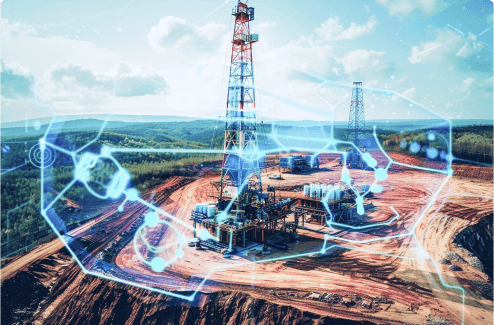
One of the top gas-producing companies in the world has successfully partnered with us to deliver an advanced project for designing a digital twin for an offshore gas condensate field with subsea production systems.
Drag
- The project scope included a pre-project survey, best practices analysis, development of functional and technical requirements, technical and conceptual design, selection of the optimal software-hardware architecture, and a feasibility study for implementing a proactive management system for the offshore field.
Drag
- The organizational scope of the asset covered a subsea production complex and an onshore gas processing facility with a condensate stabilization unit. The produced fluids consist of dry gas, stable gas condensate, and natural gas liquids.
Drag
Quote block
Drag
HEAD
Drag
HEAD
Drag
HEAD
Drag

Drag

Drag

Digital twin functions
Maintaining an equipment and materials register related to maintenance procedures.
Planning an integrated maintenance schedule across all departments, including material and resource planning.
Monitoring operational modes and proactive responses to prevent complications in the subsea production complex, including wells and the gathering system.
Continuous optimization of the operating modes at the onshore processing facility and condensate stabilization unit to maximize liquid hydrocarbon recovery.
Key project tasks
Integration of existing systems and data acquisition.
Implementation of a lifecycle management system for equipment.
Development of a digital integrated model using both physical (first-principle) models and neural network models.
Configuration of executive dashboards for monitoring KPIs, data entry, and performance tracking.
Expected outcomes for the customer
1.2% annual increase in stable gas condensate output.
3.5% reduction in equipment repair costs.
5% reduction in material costs due to decreased consumption of MEG and methanol.